
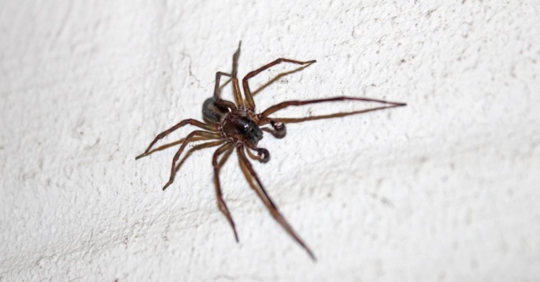
Finding a spider in your home can be a startling experience. For many residents in Penobscot and Hancock Counties, the question that quickly follows is, "Is this one safe?" It’s a completely normal reaction, especially for families with curious children and pets. The good news is that most spiders you’ll encounter in your home are simply looking for shelter or a meal and are not a threat to you or your family.
If you're dealing with a spider problem that feels overwhelming, don't wait. For a quick response to your pest concerns, reach out to us now through our online contact form or by calling (207) 477-7446.
Common Spiders in Maine Homes
While Maine is home to many different spider species, only a small number frequent our indoor spaces. They’re a valuable part of the local ecosystem, often preying on other insects, and are generally timid around people. Their presence is usually a sign of a healthy environment, and they are not considered a danger. Understanding who they are and what they look like is the first step toward feeling more at ease.
Daddy Longlegs (Harvestmen)
Often mistaken for true spiders, these arachnids are easily identified by their small, oval-shaped bodies and extremely long, thin legs. They don't have venom glands or fangs, so they are entirely harmless. You'll often find them huddled together in damp, dark spots like basements and cellars.
Cellar Spiders
These are the true "daddy longlegs" of the spider world, with very long, delicate legs and small bodies. They build messy, tangled webs in corners and undisturbed areas. They are completely harmless to humans and are helpful for controlling other insects.
House Spiders
These spiders are the classic cobweb creators, building tangled webs in the corners of rooms, windows, and under furniture. They are typically small and brown or gray. While their webs can be a bit of a nuisance, they are not a medical concern.
Wolf Spiders
These are some of the most misunderstood spiders in our area. They are large, hairy, and move quickly, which can be alarming. Wolf spiders don't build webs to catch their prey; instead, they are active hunters that chase down insects. They are generally brown or gray with markings and are often seen scurrying along floors or foundations. While they can bite if they feel cornered, their bites are not dangerous and are often compared to a bee sting.
Jumping Spiders
These tiny, often fuzzy spiders are a delight to watch. They are active during the day and have excellent eyesight, which they use to stalk and pounce on their prey. They are identifiable by their jerky movements and two very large front eyes. Jumping spiders are not aggressive and rarely bite, but if they do, the sensation is mild and not a medical issue.
Identifying the Potentially Harmful Species
While the vast majority of spiders in Maine are not a threat, it’s natural to want to know about the few that could be. Two species with medically significant venom, the black widow and the brown recluse, are not native to Maine and are very unlikely to be found here in the wild. If they are, it's usually because they have been accidentally transported in goods from other states.
Brown Recluse Spiders
The brown recluse spider is one of the most well-known and feared spiders in the country, largely due to its venomous bite that can cause a necrotic (flesh-eating) wound. However, these spiders are not native to New England. Their natural habitat is the central and southern United States, and our cold winters make it nearly impossible for them to establish a stable population here.
If you see a spider that you think is a brown recluse, it’s most likely a different, harmless species that looks similar. Many common Maine spiders, like the wolf spider or the funnel weaver, are often mistaken for the brown recluse. The most reliable way to identify a brown recluse is by its unique "violin" shape on its back, with the neck of the violin pointing toward the spider's abdomen. They also have six eyes arranged in pairs, which is a rare characteristic among spiders. The chances of encountering one in the wild in Penobscot or Hancock counties are extremely low.
Black Widow Spiders
The black widow is another spider with a fearsome reputation. There are a few different species of black widows, but the one you may hear about in our region is the northern black widow. While there have been a handful of sightings of this spider in Maine over the years, they are not common and are not considered to have a stable population here.
A female black widow is shiny black with a distinctive red or orange marking on her abdomen. This mark is usually an hourglass shape, but in the northern black widow, it may be two separate triangles. They build messy, irregular webs in secluded, undisturbed areas. Black widows are shy and only bite in self-defense, typically when they feel trapped or are accidentally handled. Their venom is potent and can cause severe muscle cramps, nausea, and other symptoms, but bites are very rare and rarely fatal. If you suspect you've been bitten by one, it's a good idea to seek medical attention.
When to Consider Spider Control
For the most part, spiders are beneficial and should be left alone. However, an increased number of spiders in your home can be a sign of a larger insect problem. Since spiders are drawn to places with a plentiful food source, a sudden influx of spiders might mean there are more insects than you realize.
If you’re seeing more spiders than usual, or if their presence is making you or your family uncomfortable, there are some steps you can take.
- Start with Prevention: Simple changes can make a big difference. Sealing cracks and gaps around doors, windows, and your home’s foundation can prevent many pests, including spiders, from getting inside.
- Declutter and Clean: Spiders love to hide in cluttered areas. Tidying up your basement, attic, garage, and other storage spaces will reduce the number of hiding spots and make it easier to notice them.
- Remove Webs: Regularly sweeping away webs with a broom or vacuum will disrupt spiders and encourage them to move on.
- Address Other Pests: Since spiders are predators, reducing their food source is one of the most effective ways to control their numbers. If you're seeing lots of flies, ants, or other insects, addressing those issues will naturally lead to fewer spiders.
Proactive Solutions for Spider Problems
If you’ve tried these steps and are still dealing with a recurring or significant spider issue, it might be time to bring in professional help. We understand the concern that spiders can cause for homeowners, especially when their presence disrupts your peace of mind. Our team is dedicated to providing effective, tailored solutions that get to the root of the problem. We focus on identifying entry points, removing spider habitats, and creating a proactive plan to keep them from coming back. We also offer specialized services for all your general pest control needs.
If spiders have become an unsettling presence in your home, don’t let the problem get bigger. We can help you identify the species you're dealing with and provide a solution that restores your sense of security. For more information on how we handle these eight-legged pests, check out our spider control services page.
Get Professional Help for Your Spider Concerns
When it comes to spiders in your Maine home, it's reassuring to know you have a trusted local partner who understands the unique pests of our region. Our approach is designed to provide you with peace of mind by addressing the issue head-on. If you're ready to take back your home from unwanted guests, the team at Proactive Pest is here to help.
Contact us today to schedule an inspection and get a personalized plan. You can reach us at our online contact form or at (207) 477-7446.